The Quiet Work of Renewal
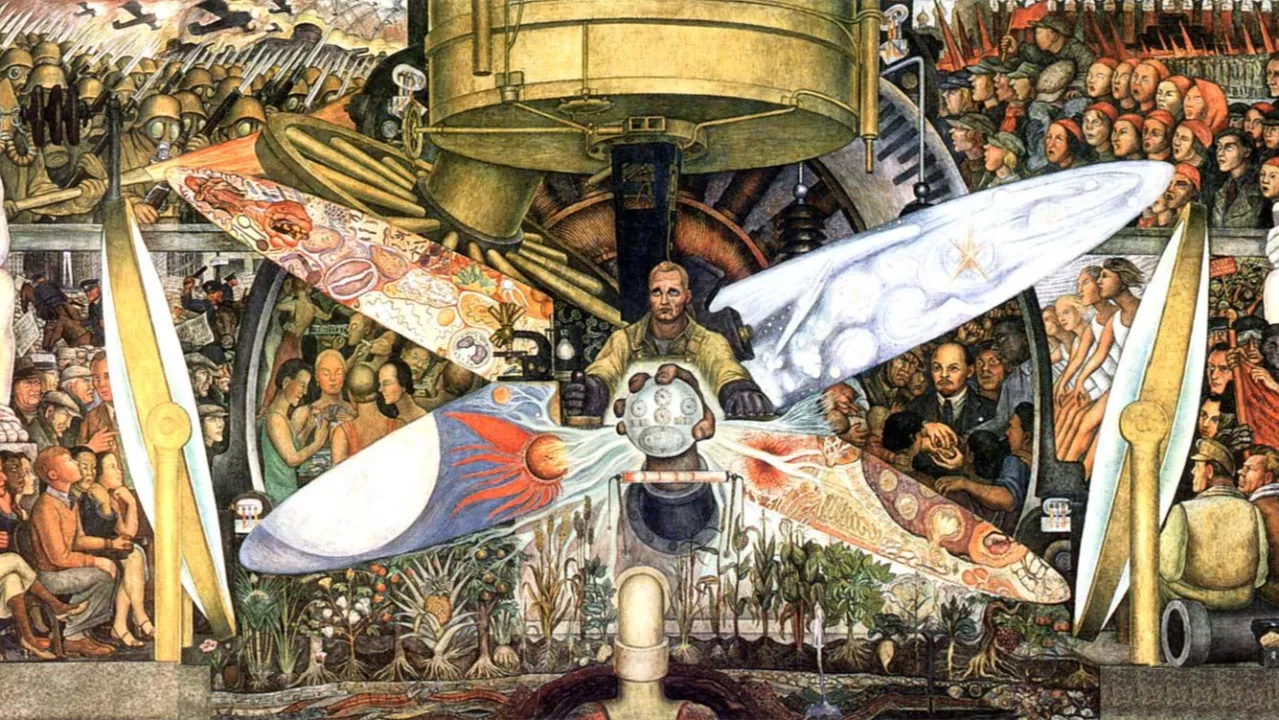
“The old world is dying, and the new world struggles to be born: now is the time of monsters.” - Antonio Gramsci
Western society isn’t collapsing, but feels like it’s slowly coming apart. Not with a bang, but with exhaustion. We move constantly, but don’t seem to arrive. We optimize everything, but rarely renew what truly matters.
I felt the early outlines of this long before I had words for it. In the aftermath of the 2008 financial crisis, I was working for the U.S. Treasury in a field office in San Francisco - close enough to see how our systems nearly unraveled yet responded with surprising force. There was a different kind of urgency then. The iPhone had just exploded onto the scene. Tech was ascendant. Reinvention felt real and possibility had momentum. Our institutions were slow, but tech was fast driving new creative energy.
And for a while, it seemed, at least to me, tech alone had all the answers.
But over time, things accelerated but lost coherence.
I had a unique vantage point in seeing this unfold. I spent most of the 2010s in Asia - researching, building, wandering. I lived in cities where the future still felt open-ended. Where ambition hadn’t yet curdled into anxiety. Where progress still felt civilizational, not just cosmetic.
When I returned to the U.S. in 2021, what I’d once sensed faintly had thickened into something heavier. A country that moves fast but felt stuck. That talked endlessly of change but seemed to have completely forgotten how to build.
I’ve been processing this for the last four years. But what I’m after now isn’t a diagnosis - it’s finding people and ideas with the courage to build something meaningful that can endure. I didn’t have the word for it at the time, but what I was beginning to practice - quietly, almost instinctively - was discernment.
I’ve misjudged the pace at which real trust develops, trying to drive change faster than relationships could sustain. I’ve mistook momentum for meaning, assuming what was new was also inherently valuable. But failure has been a great teacher. Over time, discernment stopped feeling like retreat and began to feel like a real skill. The patience to build slowly, intentionally, toward something that lasts.
What once felt like a contrarian view now feels increasingly shared. From Peter Thiel’s observation that “we wanted flying cars, instead we got 140 characters” to Ezra Klein’s recent call for a politics of abundance, voices across the political spectrum are naming the same fatigue. Despite decades of digital innovation, U.S. productivity growth has hovered below 1.5% since the 1970s.
Call it decadence. Call it drift. Call it whatever you like.
But the deeper question is this: What might renewal actually look like and who has the patience and clarity to see it through?
The Discipline of Discernment
In an age of spectacle, discernment feels like an act of rebellion.
It’s the ability to sit with what feels off before you can name why. To notice when new initiatives are mimicking progress instead of generating it. To know the difference between performative optics and substantial work.
Discernment doesn’t announce itself. It watches. It listens for repetition dressed as novelty, for energy that burns hot but fades as soon as you pay sustained attention to it.
It filters the signal from the noise by moving deeper, not faster. You learn to see not only what’s broken, but what’s pretending to work. You begin to notice when institutions change the messaging, with new logos, or new tech, but maintain the same hollow core.
That’s why burnout today feels more than personal. It’s systemic. Contagious. A signal that the stories propping up our systems no longer nourish the people inside them.
And yet: not everything operating quietly is dying. Not everything polished is thriving.
Discernment is what lets you tell the difference.
It’s what keeps us grounded while others grow numb, reactive, frenzied. It’s what keeps us from mistaking the ruins for the whole story, or the monsters for the main event.
Choosing Renewal
I believe what’s needed now isn’t more optimization. It’s renewal.
Not as branding or nostalgia but as quiet, deliberate creation from within systems that have grown tired.
Not from scratch, but from within. The ability to see where a pattern is failing, and reshape it to endure. This work demands deep context awareness, not just creativity. It blends sensitivity to what no longer works with imagination for what might.
This isn’t a new discipline. It’s a recurring one. History moves in cycles: old worlds fading before new ones form.
We’re living in that in-between Gramsci warned about. A time when the center thins, meaning unravels, and distortions rise to fill the void. Systems lose coherence and platforms amplify noise.
How do we resist this drift? Not by returning to what was, but by carefully reweaving from within - stitch by stitch, center to edge. It’s slow work. But it’s how renewal begins.
You won’t find this practice trending. It doesn’t fit neatly into MBA frameworks, product roadmaps, or TikTok advice feeds. It resists being flattened into tactics because it’s not just a mindset, but a way of seeing.
But we might find guidance in older traditions. Practices that taught people to stay grounded amid upheaval. The clarity of the Stoics. The calm of Buddhist practice. The relational depth of indigenous wisdom. These aren’t just spiritual luxuries. They’re operational advantages in a time when the maps are breaking down.
We are soon entering an era shaped by artificial intelligence. A tool of incredible potential.
But like any tool, its value depends on the wisdom with which it’s wielded.
Why This Matters Now
Discernment is hard to package. It doesn’t scale easily. But it just might be what this moment demands most.
This is my current orientation right now. If any of this resonates with you, I’d love to chat.
Because while decadence may be the air we breathe, renewal remains possible for those willing to see clearly and build deliberately.